


Growth Marketing
AI adoption in lead generation has moved from experimentation to default. A growing share of marketing teams now rely on AI tools to find prospects, qualify intent, and personalize outreach at a scale that was not possible a few years ago.
That shift marks a clear break from how lead generation used to work. Manual list building, generic cold outreach, and slow qualification cycles are being replaced by AI-assisted processes that surface better leads faster and reduce wasted effort.
This is not hype or future talk. These are the AI lead generation tools marketers actually use today to drive real pipeline, improve efficiency, and stay competitive as expectations continue to rise.
What AI Lead Generation Really Means Now
With 61% of marketers still struggling to generate consistent traffic and leads, AI lead generation today is less about automation and more about support. The goal is not to hand strategy over to software, but to remove the friction that slows teams down when identifying, qualifying, and engaging potential leads.
In practical terms, this is what AI lead generation actually means:
- AI tools support strategy instead of replacing it: They help execute decisions faster, but humans still define targeting, messaging, and priorities.
- AI agents take on repetitive, data-heavy tasks: This includes prospect discovery, data enrichment, intent scoring, and pattern detection across large datasets.
- Intelligent agents integrate into everyday workflows: They live inside CRMs, outreach platforms, and analytics tools rather than operating as standalone systems.
- AI improves speed and focus, not judgment: Tools surface insights and suggestions, but marketers decide what to act on and when.
- Human oversight remains essential: The most effective teams treat AI as a co-pilot that amplifies decision-making, not a replacement for it.
At its best, AI lead generation removes friction from the process while keeping strategy firmly in human hands, reflecting how AI-driven search is reshaping how customers are discovered.
AI Lead Generation Tools Marketers Actually Use
With 79% of leads never converting, most AI tools never make it past testing. The ones that do solve a specific problem, fit into existing workflows, and deliver consistent results without replacing strategy.
The tools below reflect how AI is used in real lead generation today. Each one supports a different part of the process, from prospecting to outreach to qualification. They are included because marketers rely on them daily, not because they are trending.
This section focuses on practical use, not promises. Each tool shows how AI can improve efficiency and lead quality while keeping decision-making in human hands.
Tool #1: Clay
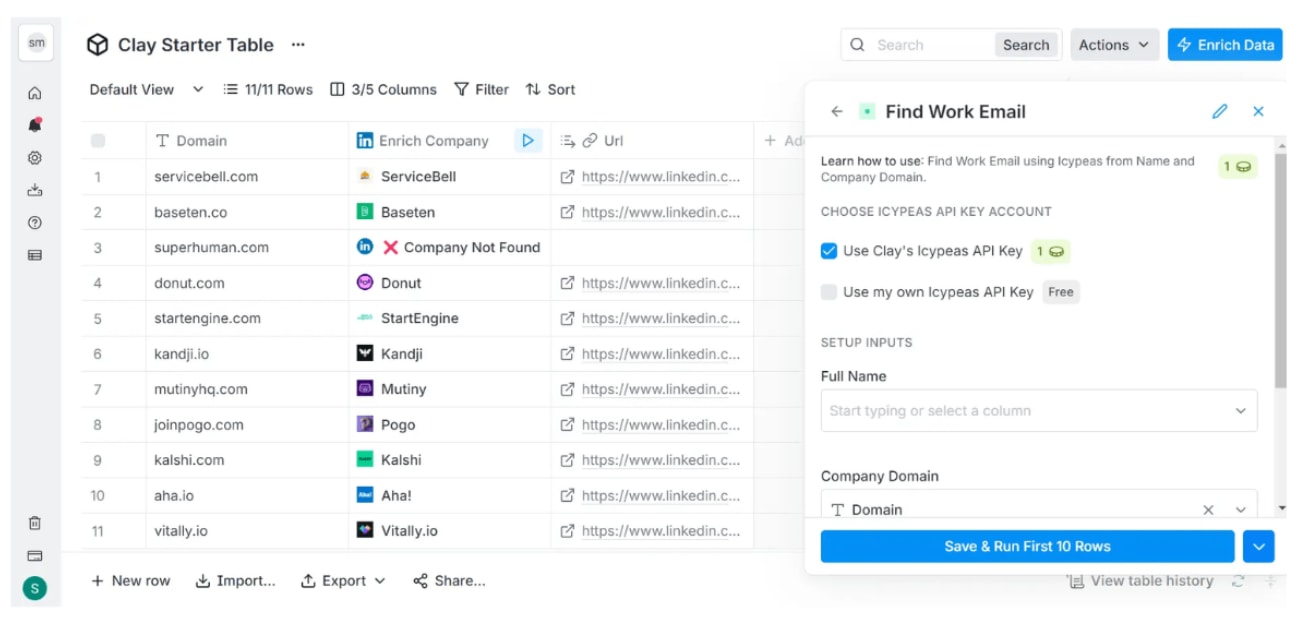
Clay is an AI-powered lead generation tool marketers use to replace manual prospect research with automated data enrichment and scoring. It pulls lead data from multiple sources at once and applies AI to qualify and prioritize accounts inside a single workflow.
Instead of building lists by hand, marketers use Clay to enrich contacts with firmographic details, role data, company signals, and intent indicators before outreach ever begins.
Why marketers actually use it: Clay removes research bottlenecks. It speeds up list building, reduces bad-fit leads, and helps teams focus outreach on accounts that match their ICP. It is especially valuable for outbound and account-based workflows where data quality matters more than volume.
Best use case: Clay works best for B2B teams running outbound sales, growth marketing, or ABM campaigns that rely on accurate, enriched lead data.
How AI helps: AI in Clay handles enrichment, scoring, and filtering at scale. Marketers set the rules. The tool executes faster and more consistently than manual research ever could.
Tool #2: Apollo
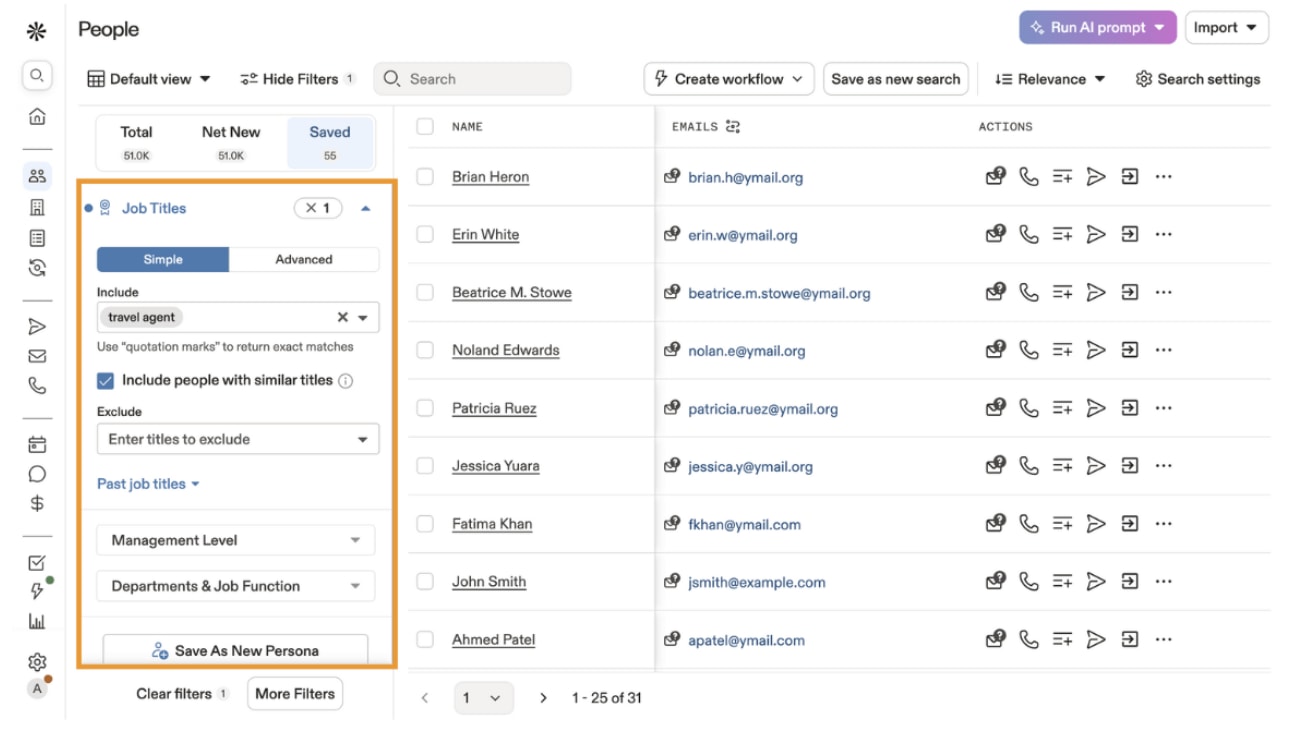
Apollo is an AI-powered prospecting and outreach platform marketers use to find leads and launch campaigns from the same place. It combines a large B2B contact database with AI-assisted filtering, sequencing, and messaging.
Instead of juggling separate tools for data, email, and tracking, marketers use Apollo to move from lead discovery to outreach without breaking workflow.
Why marketers actually use it: Apollo reduces friction between finding leads and contacting them. Teams rely on it to quickly build targeted lists, personalize outreach at scale, and track performance without complex setup. It is popular because it works out of the box and scales as campaigns grow.
Best use case: Apollo works best for B2B marketers and sales teams running outbound email campaigns, especially when speed and volume matter alongside targeting accuracy.
How AI helps: AI assists with lead filtering, email personalization, and sequence optimization. Marketers control the messaging strategy, while Apollo helps execute outreach more efficiently and consistently.
Tool #3: Instantly
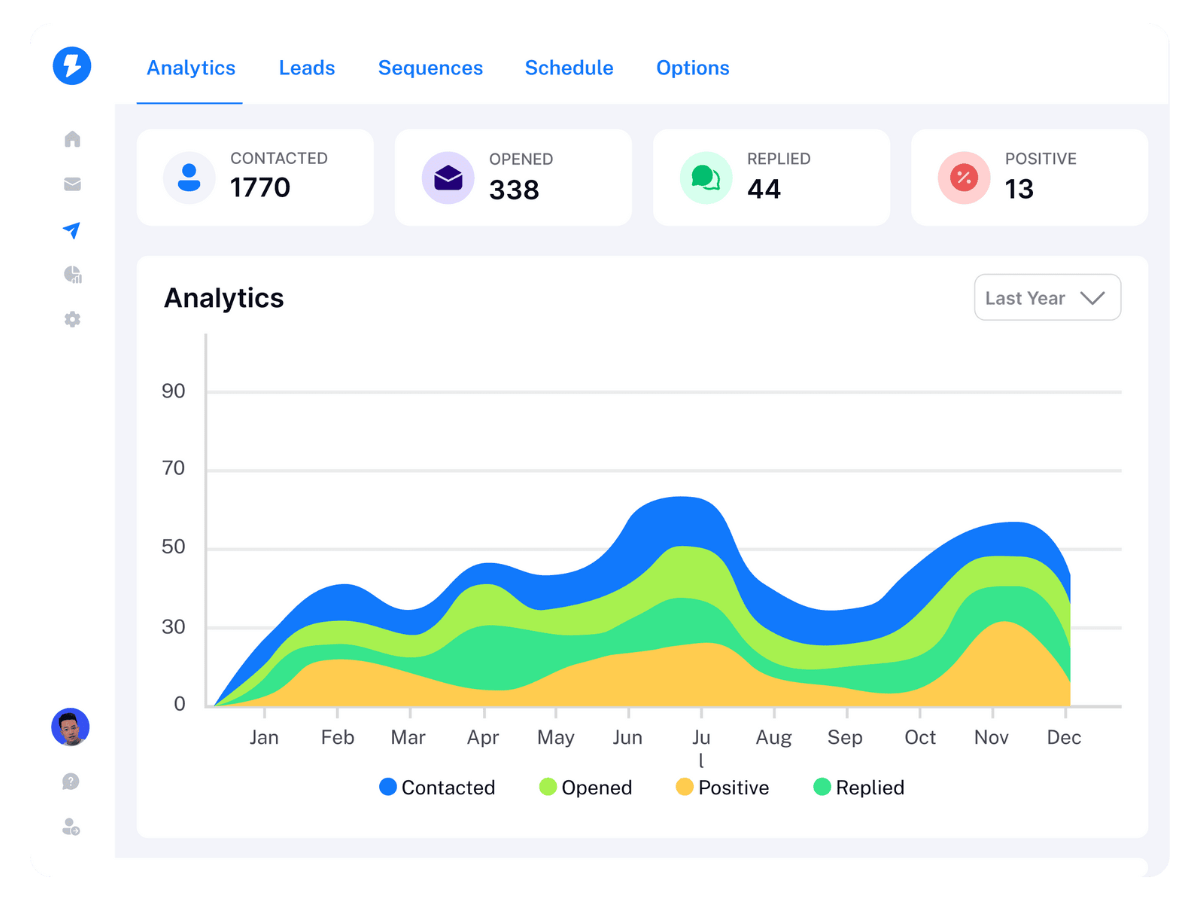
Instantly is an AI-powered cold email platform marketers use to scale outbound outreach without sacrificing deliverability. It focuses on inbox placement, sending infrastructure, and AI-assisted personalization rather than complex automation.
Instead of manually managing domains, warm-up, and sending limits, marketers use Instantly to handle the technical side of cold email so campaigns can scale safely.
Why marketers actually use it: Instantly removes the technical friction that usually breaks outbound campaigns. Marketers rely on it to protect deliverability, manage multiple inboxes, and launch campaigns quickly without deep email infrastructure knowledge.
Best use case: Instantly works best for B2B teams running cold email at scale, especially agencies, founders, and growth teams that depend on outbound lead generation.
How AI helps: AI supports inbox warm-up, send optimization, and message variation. Marketers still write the core messaging, but Instantly helps ensure emails land in inboxes and not spam folders.
Tool #4: Clearbit
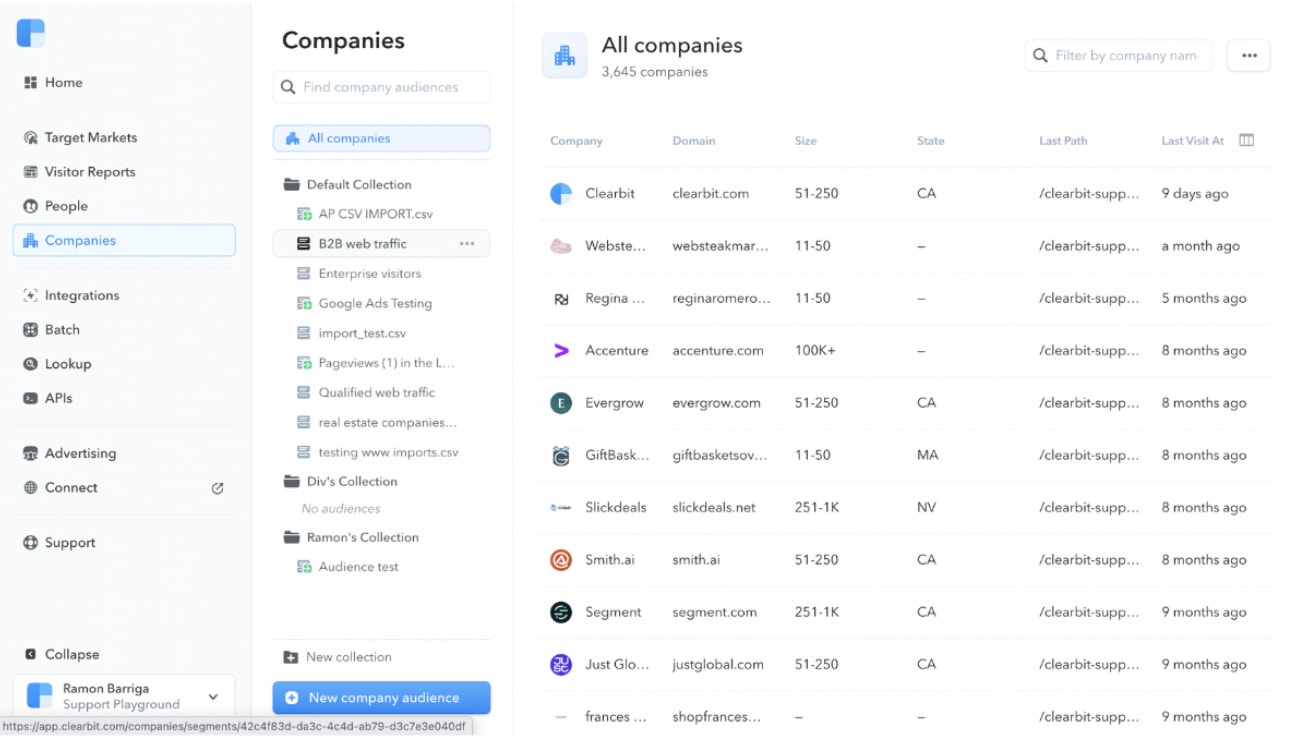
Clearbit is an AI-powered data enrichment tool marketers use to turn anonymous traffic and partial lead data into usable profiles. It enriches contacts and companies with firmographic, demographic, and technographic details in real time.
Instead of guessing who a lead is, marketers use Clearbit to understand intent, fit, and context before outreach or routing.
Why marketers actually use it: Clearbit improves lead quality without adding friction. Teams rely on it to qualify inbound leads faster, personalize messaging, and route prospects to the right campaigns or sales reps.
Best use case: Clearbit works best for inbound-focused teams, SaaS companies, and growth marketers who want better visibility into who is visiting, signing up, or engaging.
How AI helps: AI powers enrichment and matching across large datasets, filling gaps automatically. Marketers define how that data is used, while Clearbit ensures it stays accurate and actionable.
Tool #5: HubSpot (AI-Powered Lead Scoring & Automation)
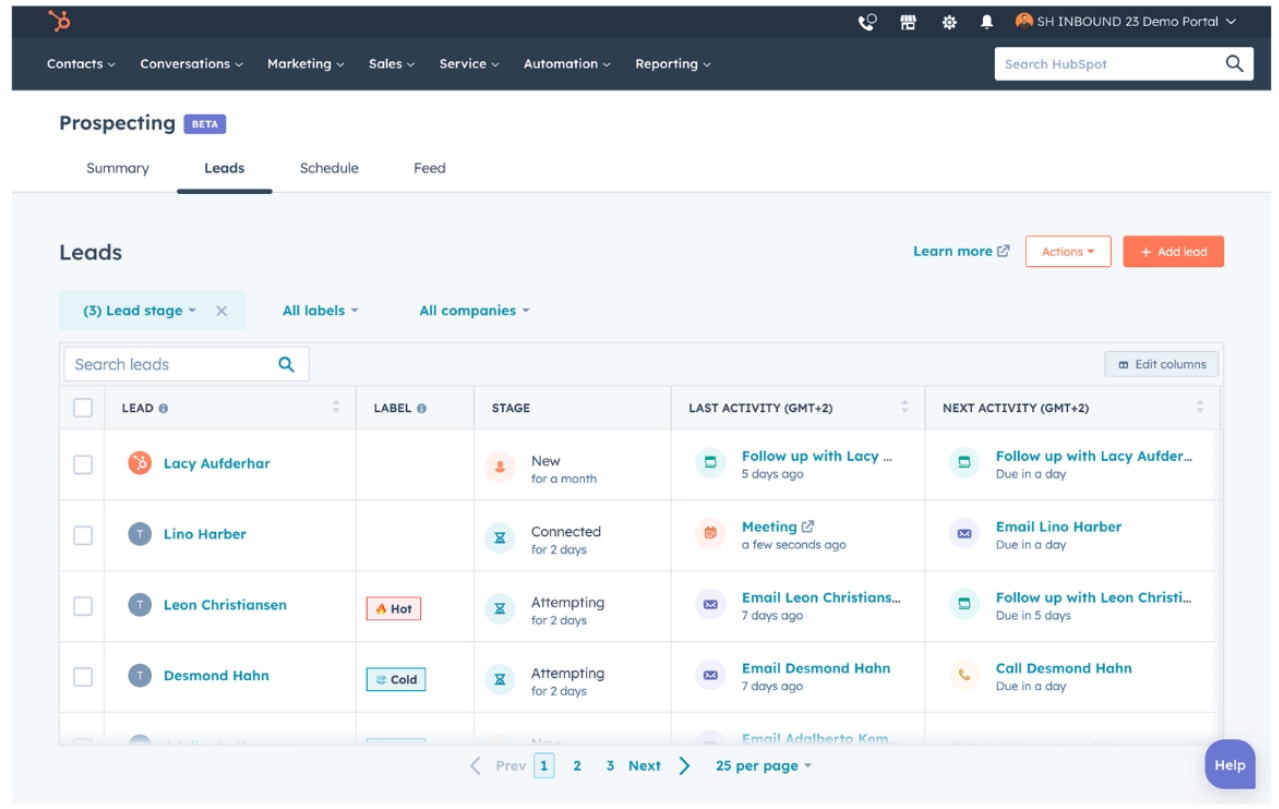
HubSpot is widely used by marketers as a central system for managing leads once they enter the funnel. Its AI-powered features help score leads, prioritize follow-ups, and automate nurturing without losing visibility into what’s happening.
Rather than acting as a standalone AI tool, HubSpot works as the control layer where lead data, engagement signals, and conversion activity come together.
Why marketers actually use it: HubSpot keeps lead generation organized as volume grows. Marketers rely on it to track where leads come from, score intent automatically, and trigger the right follow-up at the right time. It reduces guesswork once leads start converting.
Best use case: HubSpot works best for teams that want a single platform to manage inbound leads, lifecycle stages, and marketing automation without stitching together multiple systems.
How AI helps: AI assists with lead scoring, predictive insights, and workflow optimization. Marketers set the rules and messaging, while HubSpot helps prioritize effort and maintain consistency at scale.
What to Track to Know These Tools Are Working
Listing tools is easy. Knowing whether they actually improve lead generation is harder. The metrics below show whether AI tools are driving meaningful results, not just activity.
- Lead volume vs lead quality: Track how many leads you generate alongside how many meet your qualification criteria. AI tools should reduce noise by improving fit, not inflate volume with low-intent contacts.
- AI impact on lead scoring and conversions: Monitor changes in lead scores, conversion rates, and time-to-contact. If AI is working, higher-quality leads should move faster through the funnel and convert at higher rates.
- Engagement quality, not surface metrics: Opens and clicks matter less than replies, booked meetings, and follow-up actions. Look at depth of engagement to understand whether AI-assisted outreach resonates.
- Assisted conversions and pipeline influence: Many AI-driven leads convert later through different channels. Track how AI-sourced leads contribute to pipeline value, deal velocity, and assisted conversions over time.
- Using analytics and CRM data together: Combine analytics data with CRM reporting to see the full picture. Analytics shows behavior. CRM data shows outcomes. Together, they reveal which tools influence real revenue, not just early-stage metrics.
If AI tools are working, you should see better leads, stronger engagement, and clearer impact on pipeline, not just higher activity counts.
Common Mistakes Marketers Make With AI Lead Generation
Chasing Automation Instead of Outcomes
Teams automate repetitive tasks without defining success. AI-driven lead generation increases activity, but not qualified leads, when outcomes are unclear.
How to fix it: Start with one measurable goal per tool. Improve lead response times, increase predictive lead scoring accuracy, or shorten the sales process. Let artificial intelligence support that objective rather than replace decision-making.
Prioritizing Volume Over Lead Quality
AI lead generation software is often tuned to generate leads at scale, flooding revenue teams with low-intent contacts and slowing sales performance.
How to fix it: Use intent data, company data, and account data to qualify leads early. Focus on high-value prospects by aligning AI algorithms with ICP definitions and real-time intent signals.
Letting AI Write Everything Without Review
AI-generated outreach is sent without human oversight. Messages lack relevance, miss pain points, and fail to reflect past interactions.
How to fix it: Use AI assistants and natural language processing for drafts only. Sales engagement improves when teams personalize messaging with context from customer data and historical data.
Ignoring Data Alignment Across Tools
Contact data, intent signals, and CRM insights live in separate systems. Marketing efforts and sales engagement lose clarity.
How to fix it: Integrate AI-powered platforms with your CRM. Align inbound lead generation, account-based marketing, and outbound workflows so AI integration produces actionable insights across the funnel.
Expecting Immediate Results
AI is treated as a shortcut instead of a multiplier. Teams abandon tools before predictive analytics and machine learning models can learn from real data.
How to fix it: Evaluate performance over time. Track trends in lead qualification, engagement depth, and pipeline influence rather than short-term spikes.
AI-driven tools amplify effective lead generation strategies. When goals are clear, AI makes lead nurturing smarter and saves valuable time. When strategy is missing, AI simply scales inefficiency faster, often exposing how marketing silos quietly break lead generation strategy.
Turning AI Lead Generation Tools Into Real Pipeline
AI lead generation is no longer about experimenting with tools. It’s about building smarter workflows that improve lead quality, reduce wasted effort, and support better decisions. The opportunity in 2026 is not adopting more tools, but using the right ones intentionally, measuring what matters, and understanding how to get cited by AI systems that increasingly influence visibility and demand.
If you have questions about building smarter lead gen workflows or choosing AI tools that actually fit your process, feel free to contact the Woodside Ventures team. We help teams evaluate tools, align AI with real goals, and use data-driven insights to turn AI adoption into measurable pipeline impact.
